
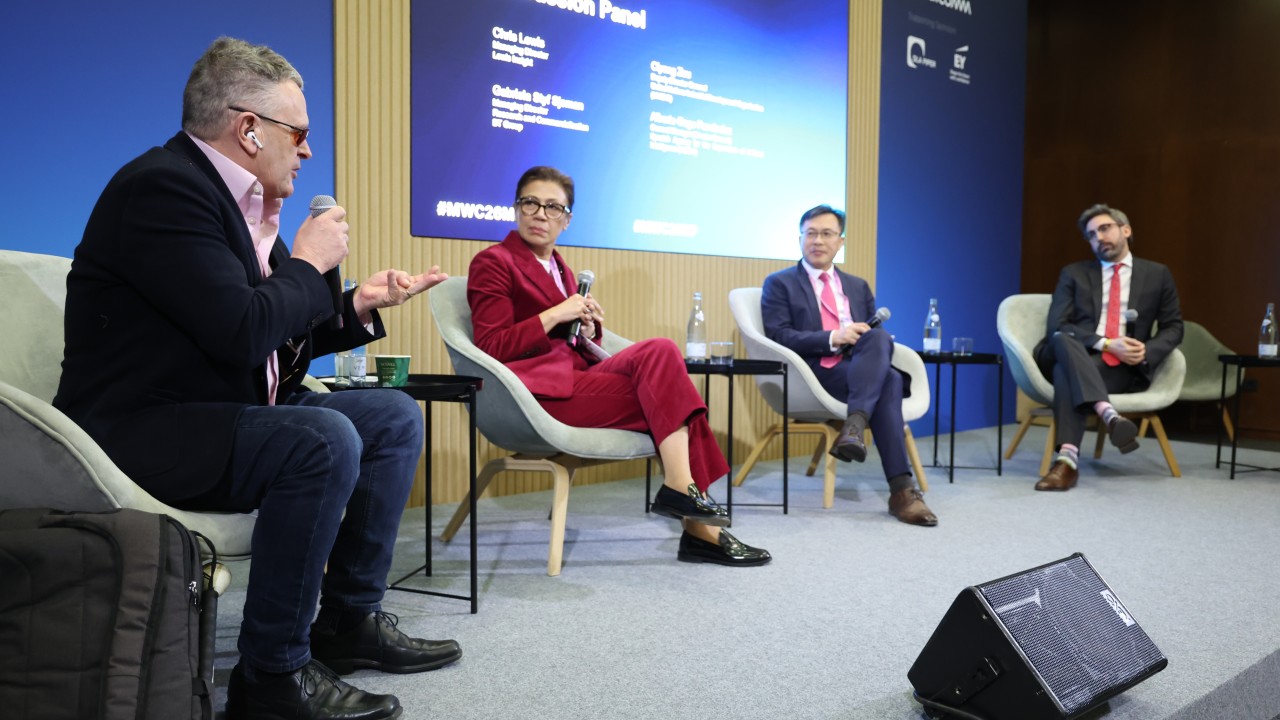
One of the highlights for me at #MWC26 was chairing a Ministerial Programme panel: “What comes after Smart?” – a forward-looking discussion on how policymakers, governments and industry can better manage, encourage and connect the next waves of AI, connectivity and cloud. Key messages I’m taking away:
· We’re moving from “connecting people and things” to coordinating complex digital lives: data, apps, agents, identity, security, cloud and networks need to work together across an ecosystem.
· Inclusion must be a global goal: we can’t accept large parts of the world (and underserved segments in developed markets) being left out of meaningful connectivity, digital skills and digital services.
· Resilience and security have to be built in from the start – the democratisation of powerful tech has a dark side, and trust is the prerequisite for scale.
· Regulation and innovation must be balanced: frameworks that protect citizens and markets while enabling innovation (and broad stakeholder engagement) will outperform rules that only try to “contain” AI.
· Trust is the thread that links everything – commercially and for public services. Citizens must trust AI-enabled government services just as customers must trust AI-enabled businesses.
· AI can reduce the digital divide (including disability, age and skills gaps) if we design inclusively and govern data properly – data governance, protection, IP and commercial confidentiality matter more than ever.
· Adoption, not technology, is the real battleground: economic growth comes from nations that both innovate and adopt. We have abundant technology supply today; demand, literacy and practical use-cases lag behind.
· SMEs need targeted enablement: they’re the backbone of most economies and can disproportionately benefit from AI, cloud and advanced connectivity – if solutions are practical and accessible.
· The next wave includes “Physical AI” (sensors, robots, situational awareness) and, longer-term, quantum. These will expand what’s connected, what data is generated, and what outcomes become possible in areas like healthcare, safety and independent living.
· Building local capability matters: countries need grassroots AI and digital infrastructure (identity, security, data spaces, open/replicable building blocks) to avoid dependency on a small set of global players.
· Outcome focus over tech hype: practical AI, stronger global cooperation, and policies that prioritise value created—not technology for its own sake.
Participants: Gabriela Styf Sjöman Managing Director, Research & Network Strategy, BT Ciyong Zou, Deputy Director General, United Nations Industrial Development Organization (UNIDO) Alberto Gago Fernández, General Manager (Director General), Spanish Agency for the Supervision of Artificial Intelligence (AESIA) .