
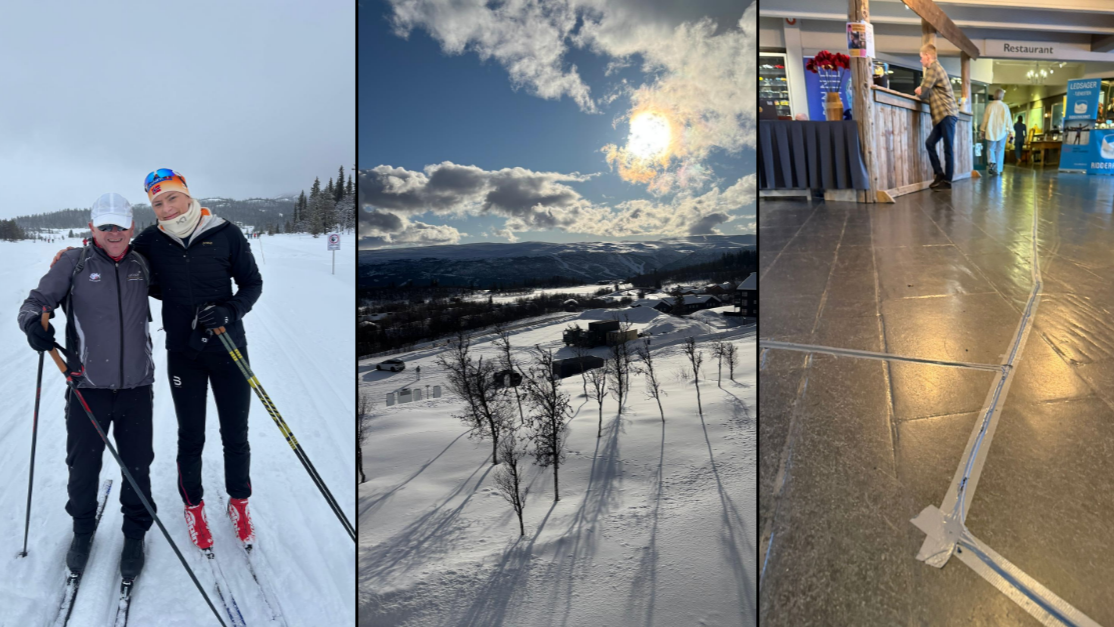
The technology industry often assumes that the latest developments, whether 5G, WiFi, satellite or AI, will solve every problem. This week I was in the Norwegian mountains with 350 vision and mobility impaired people enjoying Ridderrennet, the world’s biggest disability winter sports event.
Navigating slopes with a guide and using facilities around the resort quickly turns into a real-world test: how accessible is the town, the hotel, and the event in practice? For students from the Norwegian School of Sport Sciences, guiding is a steep learning curve: not just on the tracks and slopes, but around the hotel too. And for those of us who are blind/partially sighted or mobility impaired, it’s a challenge adapting to new untrained guides in unfamiliar environments.
Technology absolutely helps. We coordinate on WhatsApp, use Meta glasses and apps like Be My Eyes to recognize things around us and access race start times and updates. But the two most impactful accessibility features I experienced this week weren’t “high tech” at all: A simple tactile strip on the floor guiding people through the lobby to the restaurant and a beeper to indicate where the stairs were located.
This reminded me of last year’s Helen Hamlyn Royal College of Art Inclusive Design Awards where the winner was a simple physical finger guard that helps blind people chop vegetables. So when building products and services for a wider audience, let’s keep the broadest definition of “user” in mind. Design for real life and use analogue approaches where they work best. And keep humans at the heart of the design.
#Accessibility #InclusiveDesign #DisabilityInclusion #HumanCenteredDesign #AssistiveTechnology #BeMyEyes #Ridderrennet